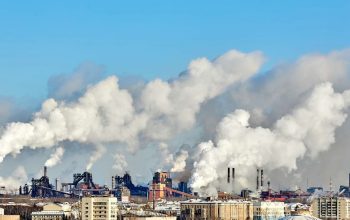
Air quality refers to the condition of the air around us and is directly influenced by pollutants such as smog, particulate matter (PM), carbon dioxide (CO2), nitrogen oxides (NOx), sulfur dioxide (SO2), and volatile organic compounds (VOCs). The air quality map is a tool that helps us visualize the concentration of these pollutants in real-time, enabling people to take necessary precautions to protect themselves from air pollution’s harmful effects.
What Is Smog and How Does It Form?
Smog is a form of air pollution that is a mixture of smoke, fog, and harmful gases. It is primarily caused by the reaction of sunlight with pollutants such as nitrogen oxides (NOx) and volatile organic compounds (VOCs). The two most common types of smog are “London-type” or “industrial smog,” and “Los Angeles-type” or “photochemical smog.” London-type smog is typically caused by the burning of coal, which releases large amounts of sulfur dioxide and particulate matter into the air, while photochemical smog forms when sunlight reacts with pollutants like nitrogen oxides and VOCs, creating harmful ozone at ground level. Both types of smog pose serious risks to human health, the environment, and the climate.

Impact of Air Pollution on Health
Air pollution has a profound impact on human health, both in the short and long term. Exposure to polluted air can cause or worsen respiratory conditions such as asthma, chronic obstructive pulmonary disease (COPD), bronchitis, and lung infections. Fine particulate matter (PM2.5) is particularly harmful because it is small enough to penetrate deep into the lungs and enter the bloodstream, leading to cardiovascular issues, strokes, and other chronic diseases. Prolonged exposure to polluted air also increases the risk of lung cancer and can weaken the immune system, making the body more susceptible to infections. Children, the elderly, and those with pre-existing health conditions are especially vulnerable to the harmful effects of air pollution. The World Health Organization (WHO) estimates that air pollution is responsible for millions of premature deaths each year.
Air Pollution and the Environment
Besides its effects on human health, air pollution has significant consequences for the environment. Pollutants like sulfur dioxide and nitrogen oxides can cause acid rain, which harms aquatic ecosystems, damages soil quality, and weakens plant life. Ground-level ozone, a major component of smog, also affects crops and forests, reducing agricultural yields and harming biodiversity. Moreover, air pollution contributes to global warming by releasing greenhouse gases such as carbon dioxide and methane into the atmosphere, exacerbating the climate crisis. The air quality map can be used to track regions with the highest levels of pollution, which can help inform environmental policies and conservation efforts.

The Role of Technology in Monitoring Air Quality
With the advancement of technology, monitoring air quality has become easier and more accessible. air quality maps provide real-time data on pollution levels in various regions, allowing people to make informed decisions about their health and the environment. These maps use a network of sensors and satellites to collect data on pollutant concentrations and provide up-to-date information that can be accessed through mobile apps, websites, or government platforms. Furthermore, innovations in air filtration technology and smart sensors have made it possible for individuals and organizations to monitor air quality indoors and outdoors, helping to reduce exposure to harmful pollutants. The integration of technology in air quality monitoring is an essential tool in combating the effects of air pollution.
The Need for Continued Action
As the world continues to urbanize and industrialize, the issue of air pollution remains a critical challenge that requires immediate attention. The air quality map provides valuable insights into the state of air quality in various regions, allowing individuals, organizations, and governments to take proactive steps to protect public health and the environment. While air pollution is a complex issue, it is not insurmountable. By using the data from the air quality map, advocating for stricter environmental regulations, and adopting sustainable practices, we can work toward a future with cleaner air for all.
Author Profile

Latest entries
 Electricity & ElectronicsFebruary 17, 2026Precision Engineering and Reliability in Industrial Power Transmission
 TechnologyJanuary 18, 2026Working at Height: Why Reliable Fall Protection Is Non-Negotiable
 Home & GardenNovember 18, 2025Finestre moderne: design, funzionalità e soluzioni innovative
 Health & BeautyJune 28, 2025Rehabilitační pomůcky nové generace: pohodlí a funkčnost v jednom