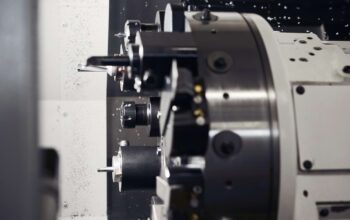
Lathes, essential machines in metalworking and woodworking, rely heavily on clutches and brakes for their efficient operation. These components are crucial for controlling the rotational movement and stopping power of the lathe’s spindle. Understanding how clutches and brakes work, common faults that occur, and how to renew these parts is vital for maintaining the optimal performance of lathes.
How clutches work in lathes
Clutches in lathes are designed to engage and disengage the drive mechanism smoothly, allowing the spindle to start and stop without sudden jerks. The primary function of a clutch in a lathe is to connect the power source (usually an electric motor) to the spindle. This is achieved through friction plates or discs that, when pressed together, transfer torque from the motor to the spindle.
Types of clutches
There are several types of clutches used in lathes, including friction clutches, electromagnetic clutches, and hydraulic clutches. Friction clutches use friction discs to transmit torque, while electromagnetic clutches use an electric coil to create a magnetic field that engages the clutch. Hydraulic clutches, on the other hand, use hydraulic fluid to engage the clutch plates.
Operation mechanism
When the clutch pedal or lever is engaged, the friction plates are pressed together, allowing the rotational motion to be transferred from the motor to the spindle. Disengaging the clutch separates these plates, stopping the transfer of motion and allowing the spindle to halt or change speed without affecting the motor’s operation.

Common faults in lathe clutches
Despite their critical role, clutches in lathes are susceptible to various faults. Regular maintenance and prompt troubleshooting are essential to ensure their proper functioning.
- Worn friction plates: Over time, the friction plates in a clutch can wear down, leading to reduced torque transfer and slippage. This is one of the most common issues and requires periodic inspection and replacement.
- Hydraulic fluid leaks: In hydraulic clutches, leaks can lead to a loss of hydraulic pressure, causing the clutch to disengage improperly or not at all.
- Electromagnetic coil failure: For electromagnetic clutches, coil failure can result in the clutch not engaging, necessitating a replacement of the coil or the entire clutch assembly.
Clutches renewal process
Renewing clutches in lathes is a meticulous process that requires attention to detail to ensure that the lathe operates smoothly and efficiently. The renewal process generally involves several steps:
Inspection and diagnosis
Before renewal, a thorough inspection of the clutch system is necessary. This includes checking the condition of the friction plates, hydraulic fluid levels, and the integrity of the electromagnetic coils. Diagnosing the specific issues helps in planning the renewal process effectively.
Disassembly
The next step involves disassembling the clutch assembly. This includes removing the cover plates, extracting the friction discs, and detaching the hydraulic or electromagnetic components. Careful documentation and labeling of parts are crucial to ensure proper reassembly.

Replacement of worn components
Worn-out friction plates, damaged hydraulic seals, and faulty electromagnetic coils need to be replaced. It is essential to use high-quality replacement parts to ensure longevity and reliable performance of the clutch system.
Reassembly and testing
After replacing the necessary components, the clutch assembly is reassembled. This involves carefully aligning and securing all parts to ensure proper function. Once reassembled, the clutch is tested for engagement and disengagement performance. Any adjustments needed are made at this stage to ensure optimal operation.
Final inspection
A final inspection ensures that the clutches renewal was carried out correctly.. This includes checking for smooth engagement, proper torque transfer, and verifying that there are no leaks or other issues. The lathe is then ready for normal operation, with the renewed clutch system providing reliable performance.
Clutches and brakes are fundamental components in lathes, crucial for their operation and safety. Understanding how they work, recognizing common faults, and knowing the renewal process are essential for maintaining the efficiency and longevity of these machines. Regular maintenance and timely renewal of these parts can prevent downtime and ensure that lathes continue to perform at their best.
Author Profile

Latest entries
 Electricity & ElectronicsFebruary 17, 2026Precision Engineering and Reliability in Industrial Power Transmission
 TechnologyJanuary 18, 2026Working at Height: Why Reliable Fall Protection Is Non-Negotiable
 Home & GardenNovember 18, 2025Finestre moderne: design, funzionalità e soluzioni innovative
 Health & BeautyJune 28, 2025Rehabilitační pomůcky nové generace: pohodlí a funkčnost v jednom